

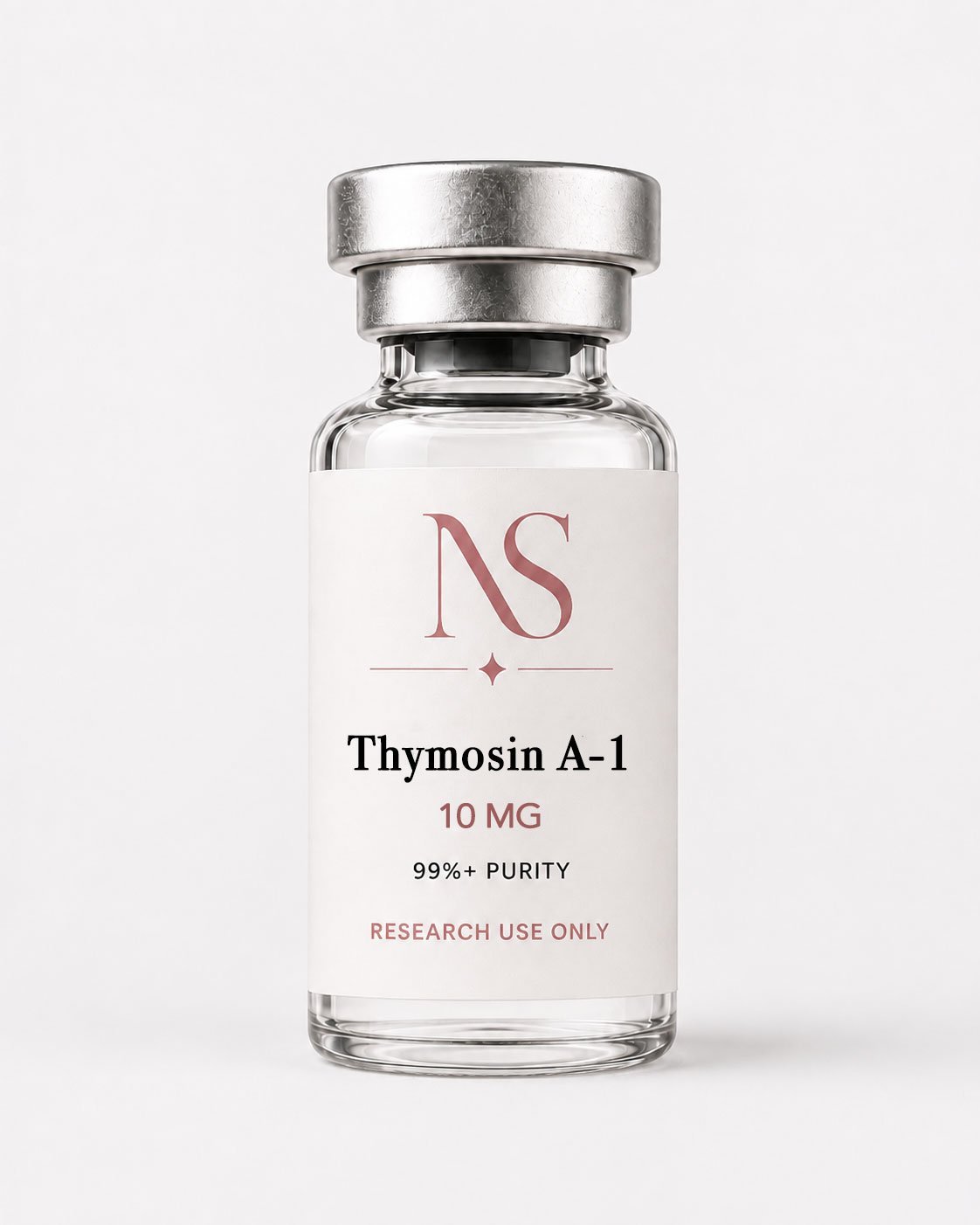
Thymosin A-1
A naturally occurring thymic peptide central to immune modulation research. Thymosin A-1 is one of the most studied compounds for T-cell function, immune balance, and antiviral response support.
The thymus gland’s own signal.
Thymosin A-1 is a 28-amino-acid fragment of prothymosin alpha, first isolated from thymus gland extract in the 1970s by researchers studying thymic hormones. It plays a natural role in T-cell maturation and remains one of the most extensively studied peptides in immune modulation research.
The immune system doesn’t announce when it’s out of balance — it shows up as illnesses that linger longer than they should, or an inflammatory response that runs hotter than the moment calls for. Thymosin A-1 research sits at that balance point, studied for its capacity to support the immune system in both directions.
Published research has documented Thymosin A-1’s role in supporting T-cell differentiation and maturation, modulating dendritic cell function, and contributing to research on antiviral response, cancer immunotherapy, and vaccine adjuvant applications. It remains one of the most thoroughly characterized peptides in thymic and immune research.
