

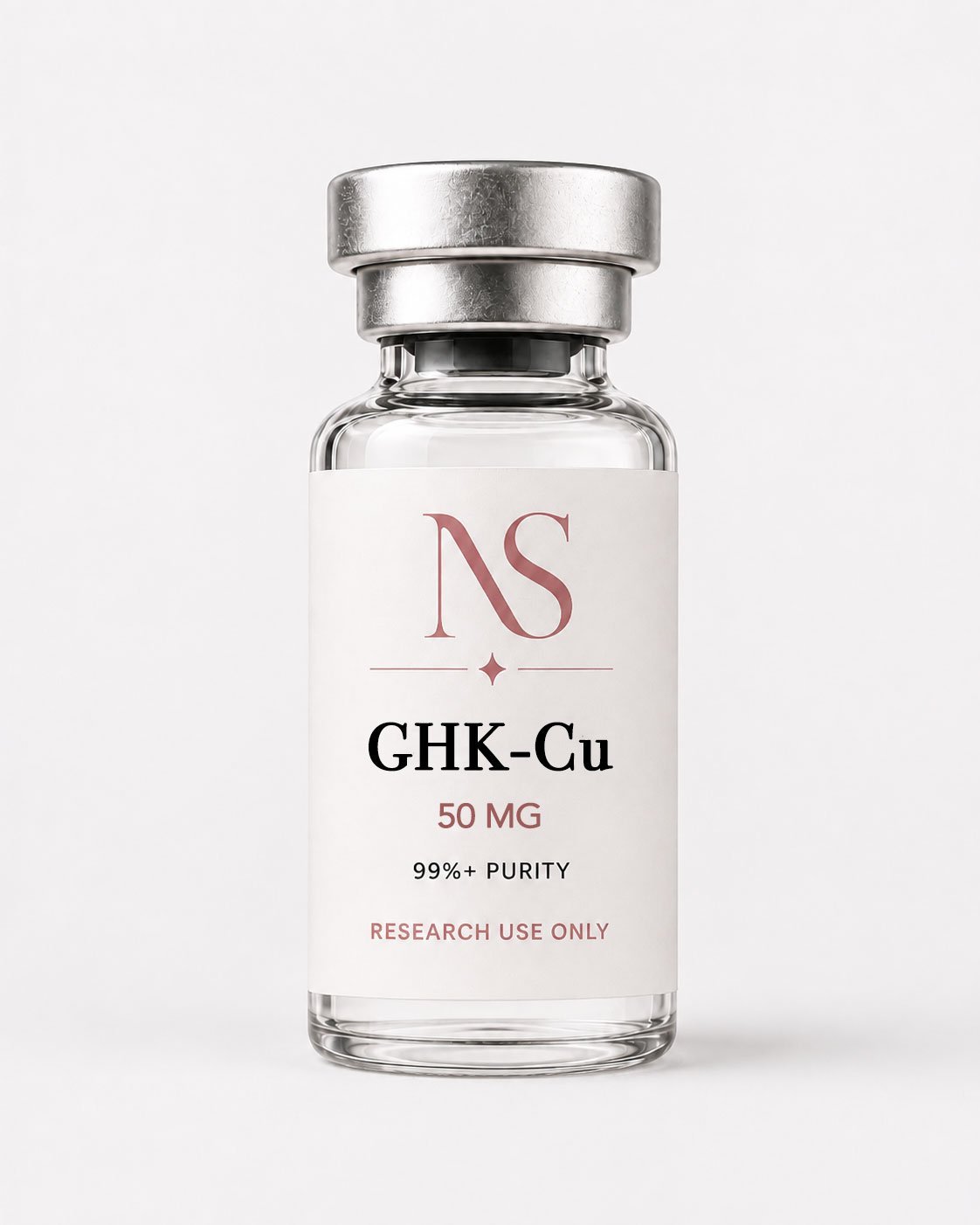
GHK-Cu
A copper-bound tripeptide central to anti-aging and skin-repair research. GHK-Cu is one of the most extensively studied peptides for collagen synthesis, tissue remodeling, and regenerative response.
Fifty years of research.
In 1973, researcher Loren Pickart isolated a tripeptide from human plasma that appeared to make aged liver tissue behave like younger tissue. That tripeptide, glycyl-L-histidyl-L-lysine, bound to copper, became GHK-Cu. Fifty years and thousands of studies later, it remains one of the most thoroughly characterized peptides in regenerative science.
Plasma levels of GHK average around 200 ng/mL at age 20. By age 60, that number drops to roughly 80 ng/mL — a decline that parallels the measurable drop-offs in skin repair and regenerative capacity that come with age.
Published research has documented GHK-Cu’s role in stimulating collagen and elastin synthesis, modulating gene expression across thousands of pathways, reducing markers of oxidative stress, and supporting the cellular mechanisms behind wound healing and tissue remodeling. It is, by most measures, one of the most extensively studied peptides in the anti-aging literature.
