Image
-11%
5X Tested - ISO 17025
Research Compound

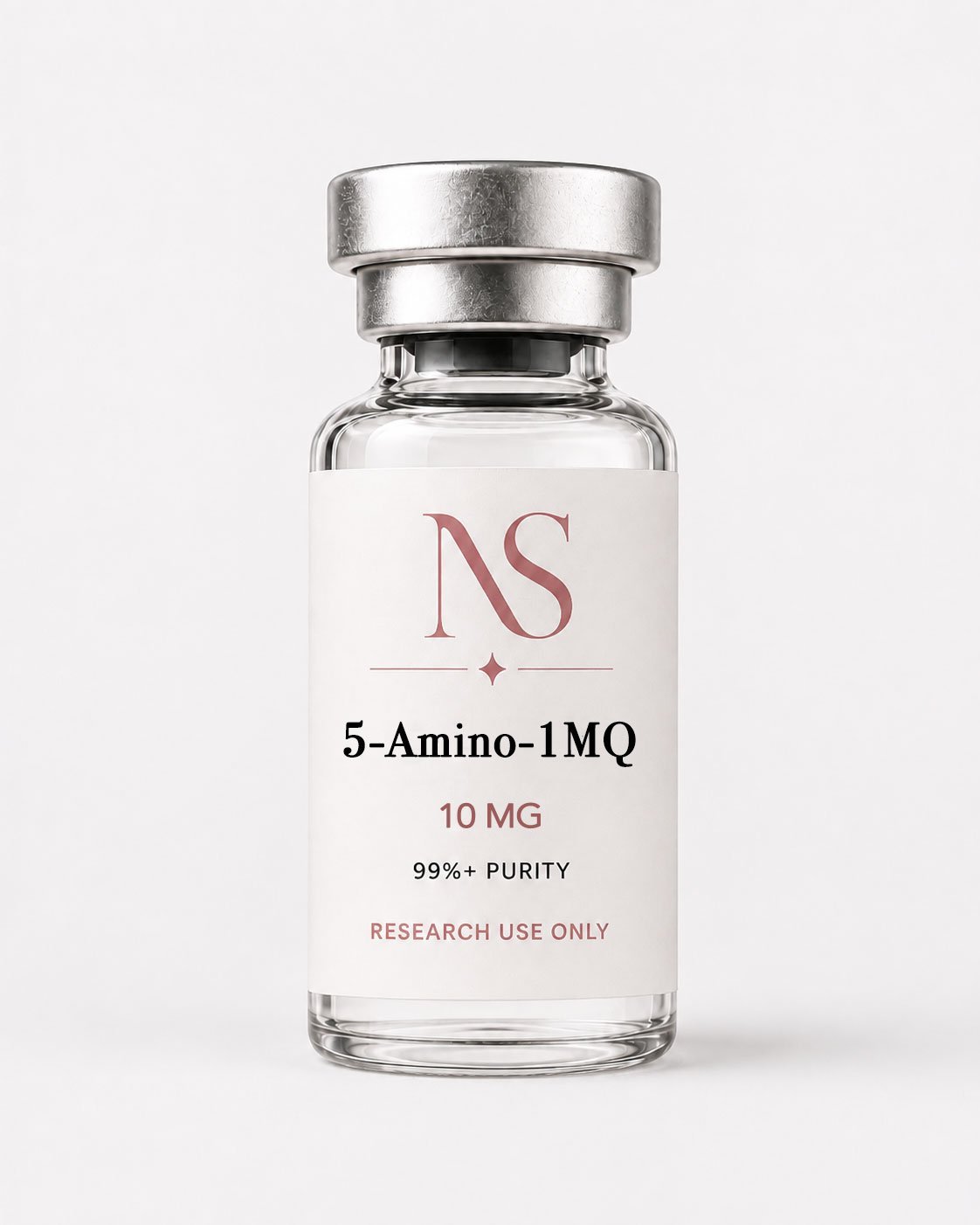
5-Amino-1MQ

4.9 (36 Reviews)
View Certificate of Analysis

A small-molecule inhibitor of nicotinamide N-methyltransferase (NNMT), studied for its influence on cellular NAD+ availability and adipose tissue metabolism. One of the most closely watched compounds in metabolic and longevity research.

BUNDLE & SAVE
We accept
For RESEARCH USE ONLY (RUO).
About the Peptide

One enzyme, precisely targeted.

5-Amino-1MQ is not a peptide. It is a small quinolinium molecule that blocks a single enzyme, nicotinamide N-methyltransferase, and that narrow mechanism is exactly what makes it interesting. NNMT sits at a metabolic crossroads, consuming both nicotinamide (a direct NAD+ precursor) and S-adenosylmethionine, the primary methyl donor a cell has to work with.

NMT is expressed at unusually high levels in white adipose tissue, and that expression climbs in models of obesity and metabolic dysfunction. When researchers reduced NNMT activity in diet-induced obese mice, published studies reported decreases in fat mass and adipocyte size with no change in food intake, a result that pointed toward energy metabolism rather than appetite.

Later work moved into muscle and aging biology, where NNMT inhibition has been examined for its effects on aged muscle stem cell function and regenerative capacity. For research focused on women, the intersection of adipose distribution, declining NAD+, and the metabolic shifts of midlife makes NNMT one of the more relevant enzymes in the field.

Research Applications

Metabolic science, built around women’s biology.

Metabolic research has been modeled largely on male physiology. NextSelf focuses on the compounds that actually matter for women’s body composition, energy metabolism, and the changes that arrive in midlife.

Adipose Tissue Metabolism


NNMT is expressed most heavily in white adipose tissue. Animal studies of NNMT inhibition have reported reduced fat mass and smaller adipocytes without any accompanying change in food intake, placing the effect on the metabolic side rather than the appetite side.

Cellular NAD+ Support


By blocking the enzyme that methylates nicotinamide, 5-Amino-1MQ preserves a direct NAD+ precursor. NAD+ levels decline measurably with age, and that decline runs through much of the current longevity literature.

Muscle & Regenerative Capacity


Published research has examined NNMT inhibition in aged muscle stem cells, where restored NAD+ signaling was associated with improved regenerative response in preclinical models. Lean mass preservation is a central question in women’s aging research.
How to read a peptide Vial
Certificate of Analysis

Independently Tested. Verified by Batch.

Current Batch  • 5AMINO10MGA
99.87%
Purity
Tested Purity by HPLC
10mg
Content

Labeled amount per vial

11.23mg
Net Content
Actual amount per vial
5-Amino 1MQ
Identification
Mass spectrometry confirmed
View COA
Frequently Asked

Questions.