

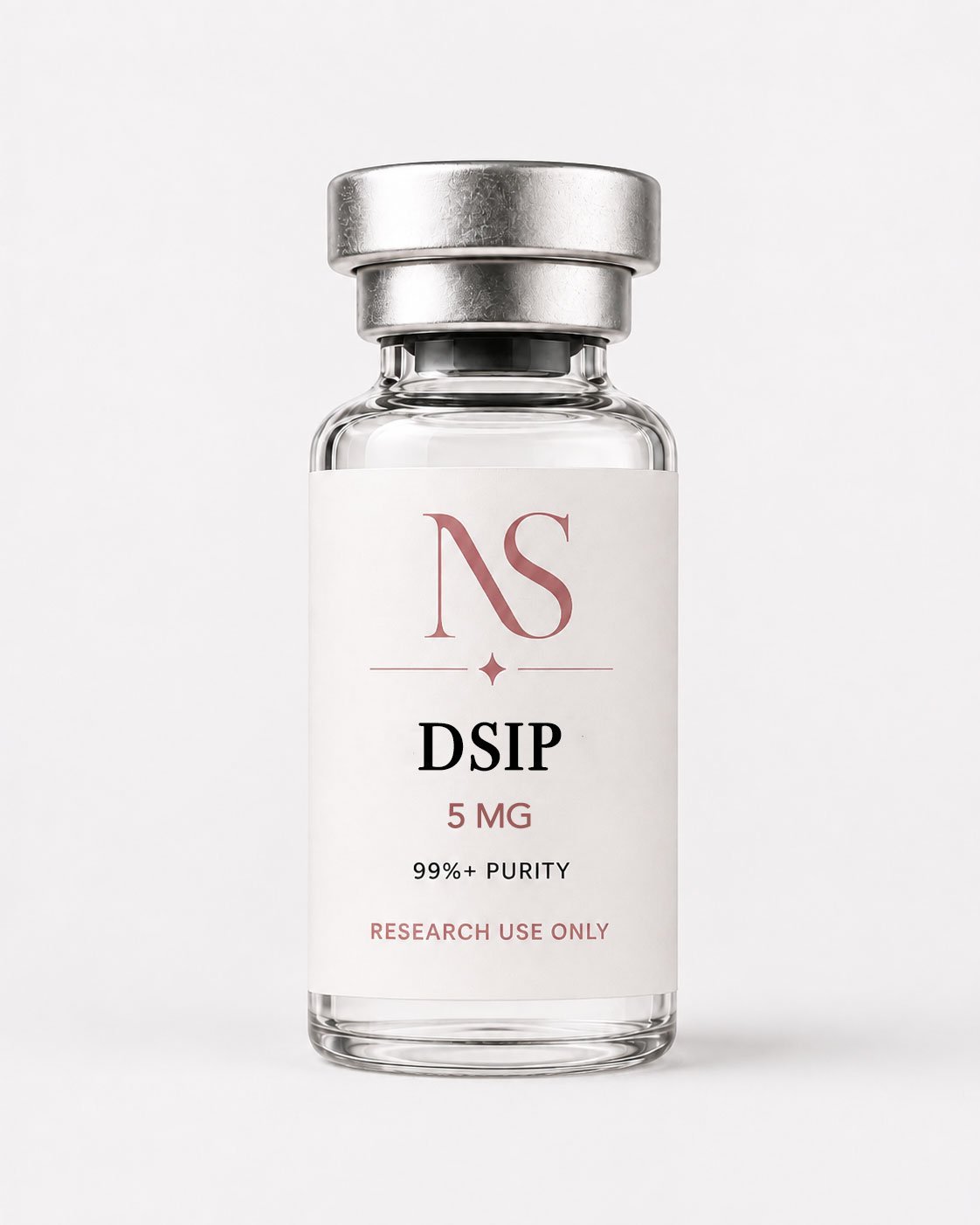
DSIP
A naturally occurring neuropeptide first identified for its role in slow-wave sleep. DSIP is studied for its influence on sleep architecture, stress hormone regulation, and circadian rhythm.
Nearly five decades of sleep research.
DSIP (Delta Sleep-Inducing Peptide) is a nine-amino-acid neuropeptide first isolated in 1977 from the cerebral venous blood of rabbits during induced sleep. Despite its name, decades of subsequent research have expanded its studied role well beyond sleep alone, into the neuroendocrine systems that govern stress response and circadian timing.
Sleep debt compounds quietly. Missed hours don’t just show up as fatigue — they ripple into cortisol regulation, recovery capacity, and the resilience women need to meet demanding days. DSIP sits at the intersection of sleep and stress physiology, two systems that rarely operate independently.
Published research has documented DSIP’s association with delta-wave (slow-wave) sleep promotion, modulation of ACTH and cortisol release along the hypothalamic-pituitary-adrenal axis, and involvement in circadian rhythm regulation. It remains one of the most studied neuropeptides in the sleep and stress-response literature.
